Skip to content

By Rodrigo Diniz · Last reviewed: May 2026

//.framework

The Reef Method.

A four-layer framework for building search and AI citation authority that compounds over time.

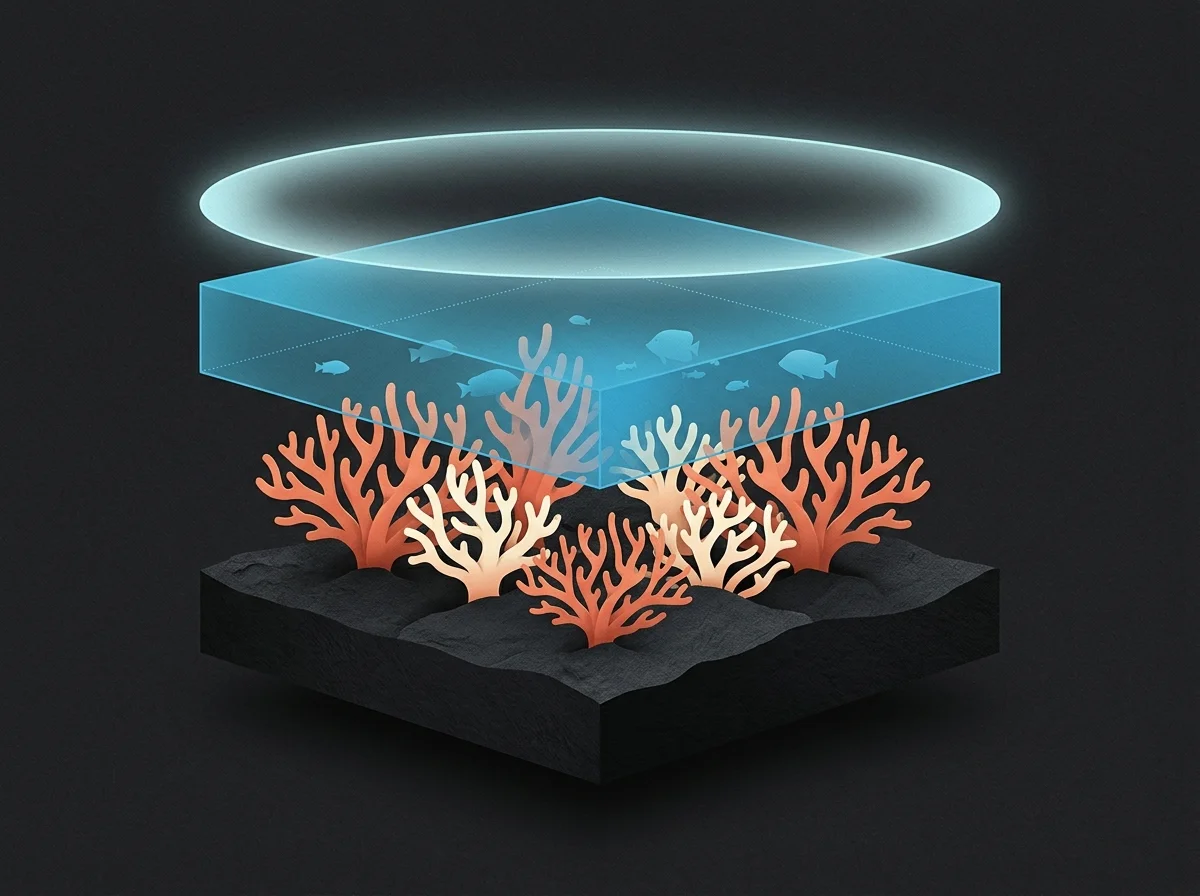
Hawaiian reefs don't grow overnight. They build in layers — substrate, coral, fish, ecosystem — each one depending on the last, each one contributing to a system that becomes more resilient, more diverse, and more valuable the longer it persists.

This is our 4-layer strategic methodology. For the underlying 6-step engagement workflow we use to deliver it, see Our Process →.

//.framework_overview

How the Reef Method Works

Search authority works the same way reefs do. The brands that dominate organic search and earn citations from ChatGPT, Gemini, Perplexity, and Claude in 2026 are the ones that built their layers in the right order, on a stable foundation, with patience.

The Reef Method is Nekko Digital's framework for building that kind of authority. It's how we structure every engagement, in every vertical, from a local Hawaii cleaning service to a multi-location hospitality group.

Search authority isn't a tactic. It's an ecosystem. And like every ecosystem, it has structure — layers that build on each other in a specific order, each one creating the conditions for the next.

//.architecture

The Four Layers, In Order

Each layer creates the conditions for the next. You can't skip a layer without the system collapsing later. Below: the visual reef cross-section, then a deeper read on each layer with links into the full breakdown.

The Reef Method — four stacked layers (Substrate, Coral, Citations, Ecosystem) rendered as a cross-section of a Hawaiian coral reef

Each layer depends on the one below. Authority compounds upward.

LAYER_01
Layer 01 of 04

Substrate

The Technical Foundation

A reef without substrate has nothing to grow on. A site without technical foundation has nothing for content or authority to attach to. The Substrate layer is everything that makes a site readable, crawlable, and trustworthy to search engines and language models — site architecture, schema markup, Core Web Vitals, internal linking, structured data, mobile performance.

Maps to: Organic SEO ·Custom Web Design
Read Layer
LAYER_02
Layer 02 of 04

Coral

Topical Authority

Coral is the architectural builder of the reef. It grows slowly, in layers, creating the structure that everything else depends on. The Coral layer of search authority is topical authority — pillar pages, supporting clusters, expert-authored articles, internal linking architecture, and the editorial discipline to publish consistently over years, not weeks.

Maps to: Content Strategy
Read Layer
LAYER_03
Layer 03 of 04

Citations

AI and Search Visibility

The citation layer is what makes the reef visible to the world. It's where ChatGPT decides to recommend you, where Google features you in AI Overviews, where Perplexity cites you as a source, where Gemini surfaces your brand as the answer to a query. Citations are earned — built on substrate and coral — but optimized through specific GEO and AEO mechanics. Productized at Nekko as Reef Citation Index™.

Maps to: GEO ·AEO ·Local SEO ·Reef Citation Index™
Read Layer
LAYER_04
Layer 04 of 04

Ecosystem

Compounding Authority

A mature reef is more than the sum of its parts. The substrate holds the coral, the coral hosts the citations, the citations attract more authority, the authority deepens the substrate. Every layer reinforces every other. The system gets more resilient with age, not less. Most engagements end before the Ecosystem layer activates. The ones that don't are the ones that change a business permanently.

Maps to: Long-engagement retainers
Read Layer
//.the_metaphor

Why "The Reef"

It's accurate.

Search authority genuinely behaves like a reef ecosystem — layered, slow-building, compounding, and increasingly resilient over time. Most SEO frameworks describe a funnel, a flywheel, or a pyramid. None of those metaphors capture what actually happens to a brand's search presence over years.

It's Hawaiian.

Nekko Digital is Hawaii-rooted. Reefs are not decoration in Hawaiian geography — they're the most consequential ecosystem in the islands. They protect coastlines, sustain fisheries, and define how communities relate to the ocean. We named our framework after them deliberately.

It's a discipline, not a tactic.

Reefs don't grow on quarterly cycles. They grow on geological ones. The Reef Method asks clients to think about authority on the timescale that authority actually compounds, which is years, not months.

//.in_practice

How We Apply The Reef Method

Every engagement at Nekko Digital is structured around the four layers. We assess where a brand currently stands at each layer, identify the gaps that are blocking compounding, and build a sequenced plan that moves through the layers in order.

The work isn't always linear — sometimes coral and citations build in parallel, sometimes the substrate needs ongoing reinforcement — but the principle holds: you cannot skip layers without the system collapsing later.

Service mapping

SUBSTRATE

Substrate work

Technical SEO, site architecture, schema, performance — Organic SEO · Custom Web Design

CORAL

Coral work

Content strategy, topical authority builds, editorial production — Content Strategy

CITATIONS

Citation work

GEO, AEO, AI search optimization — GEO · AEO · Local SEO

ECOSYSTEM

Ecosystem work

Long-engagement retainers where all four layers reinforce each other

From framework to engagement

The Reef Method is the strategic framework — what we build over years. Our 6-step engagement workflow at /method/ is how we deliver it week by week (Discovery → Onboarding → Strategic Foundation → Execution → Reporting → Growth Roadmap). The framework defines the architecture; the process defines the cadence.

//.framework_questions

Questions Operators Ask About the Framework

Direct answers to the questions buyers ask when they're evaluating whether the Reef Method is the right strategic frame for their business — before pricing, before scope, before timeline.

Why Is the Framework Named "Reef"?

The name comes from two places that genuinely converge. First, Nekko Digital is Hawaii-rooted — the company was built here, the team operates here, and the methodology was developed working with Hawaii businesses where reefs are the dominant local ecosystem. Second, and more importantly, the framework genuinely behaves like a reef: authority compounds in sequential biological layers over geological timescales, not the quarterly cycles most marketing frameworks assume.

A funnel describes acquisition mechanics over weeks. A flywheel describes momentum over quarters. A reef describes ecosystem-level compounding over years and decades — which is the actual timescale on which search and AI citation authority builds. The metaphor isn't decorative; it's diagnostic. When a brand tries to "skip to citations" without substrate, the failure mode looks exactly like coral trying to grow without rock to attach to: it doesn't stick.

How Does the Reef Method Compare to Other SEO Frameworks?

Most SEO frameworks are organized by tactic (technical SEO + on-page SEO + off-page SEO + content) or by funnel stage (TOFU + MOFU + BOFU). The Reef Method is organized by authority dynamic — what each layer does to the compounding system, not what category of work it represents. This matters because tactic-organized frameworks let teams ship discrete deliverables without ever building the compounding infrastructure; funnel-organized frameworks optimize for conversion within a single buying cycle, not across multi-year authority builds.

The Reef Method's closest peers are Russ Jones' E-A-T-as-architecture frame and Eli Schwartz's product-led SEO, both of which treat authority as a multi-layer system rather than a checklist. The Reef Method's distinct contribution is the Ecosystem layer: the explicit naming of the 24–36+ month phase where the lower three layers stop being optimized individually and start reinforcing each other automatically. Most engagements end before that layer activates — the framework names it explicitly so the ones that don't have a target to plan toward.

Can I Run the Reef Method Myself Without Hiring Nekko?

Yes — the framework is published openly because it's diagnostic, not proprietary. The four layers (Substrate, Coral, Citations, Ecosystem) each have public dedicated pages with the principles, sequencing, and signals that matter. A capable in-house team or a different agency can apply the framework without hiring Nekko.

What Nekko brings to the engagement specifically is: (1) Hawaii market expertise that informs how each layer ships against Hawaii-specific search and AI patterns, (2) the proprietary Reef Citation Index measurement instrument that quantifies the Citations layer across ChatGPT, Perplexity, Gemini, and Claude, and (3) the editorial discipline to publish under named expert bylines over multi-year horizons. The framework is yours to use; what you're hiring is execution capacity against it.

How Long Does Each Layer Take to Build?

Substrate shows measurable results in 30–90 days (technical fixes, schema, indexation health move quickly). Coral compounds over 12–18 months as topical-cluster depth and editorial cadence accumulate. Citations begin earning at 6–9 months once substrate and coral are stable; AI engines need a critical mass of cited content before they start synthesizing your brand as an answer. Ecosystem activation typically begins at 24–36 months and matures fully at 36–60 months.

These ranges assume serial, focused work. Brands trying to ship all four layers simultaneously dilute the early-win signal and extend each layer's timeline. The sequencing isn't dogmatic — sometimes coral and citations build in parallel, sometimes substrate needs ongoing reinforcement — but the foundational order holds: you cannot skip layers without the system collapsing later. The full per-layer signal breakdown lives on the dedicated layer pages.

What's the Difference Between the Reef Method (Framework) and Reef Citation Index (the Productized Tracker)?

The Reef Method is the strategic framework — the four-layer model that defines how authority compounds across substrate, coral, citations, and ecosystem. It's free, published openly, and applies to any business in any market. The Reef Citation Index™ is a productized measurement instrument Nekko built to quantify the Citations layer specifically: a quarterly tracker that queries ChatGPT, Perplexity, Gemini, and Claude on Hawaii-vertical buyer questions and publishes the citation patterns it finds.

One is the architecture; the other is the dashboard for one layer of that architecture. The first volume of the published dataset is the Hawaii AI Search Visibility Index Volume 1 (May 2026), with Volume 2 shipping August 2026. The instrument is open-methodology and CC BY 4.0 licensed — the measurement approach is portable; the dataset is Hawaii-specific.

//.faq

Common Questions.

Common questions about The Reef Method as a methodology and how it differs from other SEO frameworks.

VIEW ALL FAQS

Why a reef metaphor and not a funnel or flywheel?

Funnels and flywheels describe acquisition mechanics. The Reef Method describes authority compounding — a fundamentally different process that genuinely behaves like a layered ecosystem. Substrate holds the structure, coral builds it, citations populate it, ecosystem-level reinforcement makes it durable. We chose the metaphor because it's accurate, because Nekko Digital is Hawaii-rooted, and because reefs grow on the timescale that authority actually compounds — years, not quarters.

How does The Reef Method relate to your 6-step engagement process?

The Reef Method is the strategic framework — the four layers that authority compounds through over multiple years. Our 6-step engagement process at /method/ is how we deliver work against that framework week-by-week (Discovery → Onboarding → Strategy → Execution → Reporting → Growth). The framework defines what we build over years; the process defines how we deliver it month-to-month.

Can I skip a layer if my situation is unusual?

No. The framework is sequential because the underlying authority dynamic is sequential — citations don't stick without coral, coral doesn't grow without substrate, ecosystem-level compounding doesn't activate until citations are earned. Brands that try to jump to the citation layer before substrate is stable produce visibility that erodes within months. The sequencing isn't dogma; it's the failure mode you're avoiding.

How long until the Ecosystem layer activates?

Substrate work shows results in 30–90 days. Coral compounds over 12–18 months as content depth builds. Citations begin earning in 6–9 months and accelerate as coral matures. The Ecosystem layer — the moment when authority becomes self-reinforcing — typically begins activating at 24–36 months and matures fully at 36–60 months. Most engagements end before this layer activates. The ones that don't are the ones that change a business permanently.

Is The Reef Method specific to Hawaii businesses?

No. The framework applies universally — substrate, coral, citations, and ecosystem dynamics work the same way for a Hawaii hotel as for a national DTC brand. The metaphor is Hawaii-rooted because Nekko Digital is. The methodology is portable because the underlying mechanics are.

How do you measure progress within each layer?

Each layer has discrete leading indicators. Substrate: schema coverage, Core Web Vitals scores, indexation health, crawl-budget efficiency. Coral: topical-cluster coverage, pillar page performance, content-depth scores, editorial cadence. Citations: AI-engine citation count (ChatGPT, Perplexity, Gemini, Claude), AI Overviews appearance rate, branded-search lift, Map Pack rankings. Ecosystem: ranking volatility (lower is better), unprompted backlink velocity, branded-vs-generic search ratio, cost-per-acquisition trend over multi-year horizons.
THE REEF

Want to Build a Reef?

The Reef Method is a long-game discipline. If you're ready to invest in authority that compounds — not tactics that flame out — start a strategy conversation.